 alt Hacker News
Screenshots of Old Desktop OSes
Comments
I can't help thinking about how much we have lost. Just finding the scrollbar nowadays can be a challenge. Not to mention if you want to resize a pane - in some applications they seem to have taken extra steps to make it difficult to find the line to grab.
Probably also worth dropping this here in the off chance someone here will be part of today's lucky 10,000. http://toastytech.com/guis/
At first glance it looks like this is much more breadth over depth. Quite an array of systems here.
Invisible scroll bars are a source of constant annoyance. And it sometimes takes me several attempts to move a window, because of all the various clickable things without visible boundaries. Frustrating.
The man behind this site is known for his skills of recoverying data from QIC tapes. Looking at the "Software Library" section makes me always wonder if it will be released at some point, since that there is some stuff that isn't on BitSavers or other sites.
My favorites:
GEM + Ventura Publisher http://www.typewritten.org/Media/Images/ventura-publisher-1....

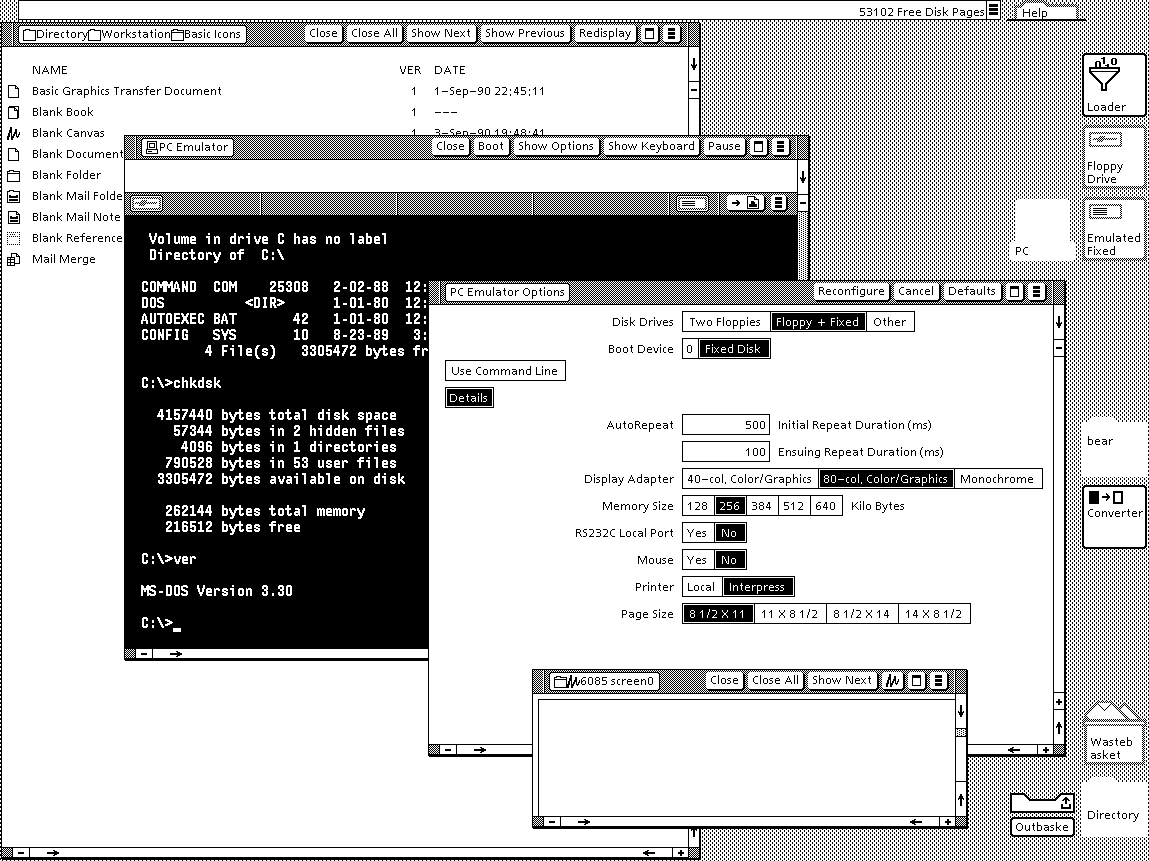
Viewpoint http://www.typewritten.org/Media/Images/6085-viewpoint-2.0-p...
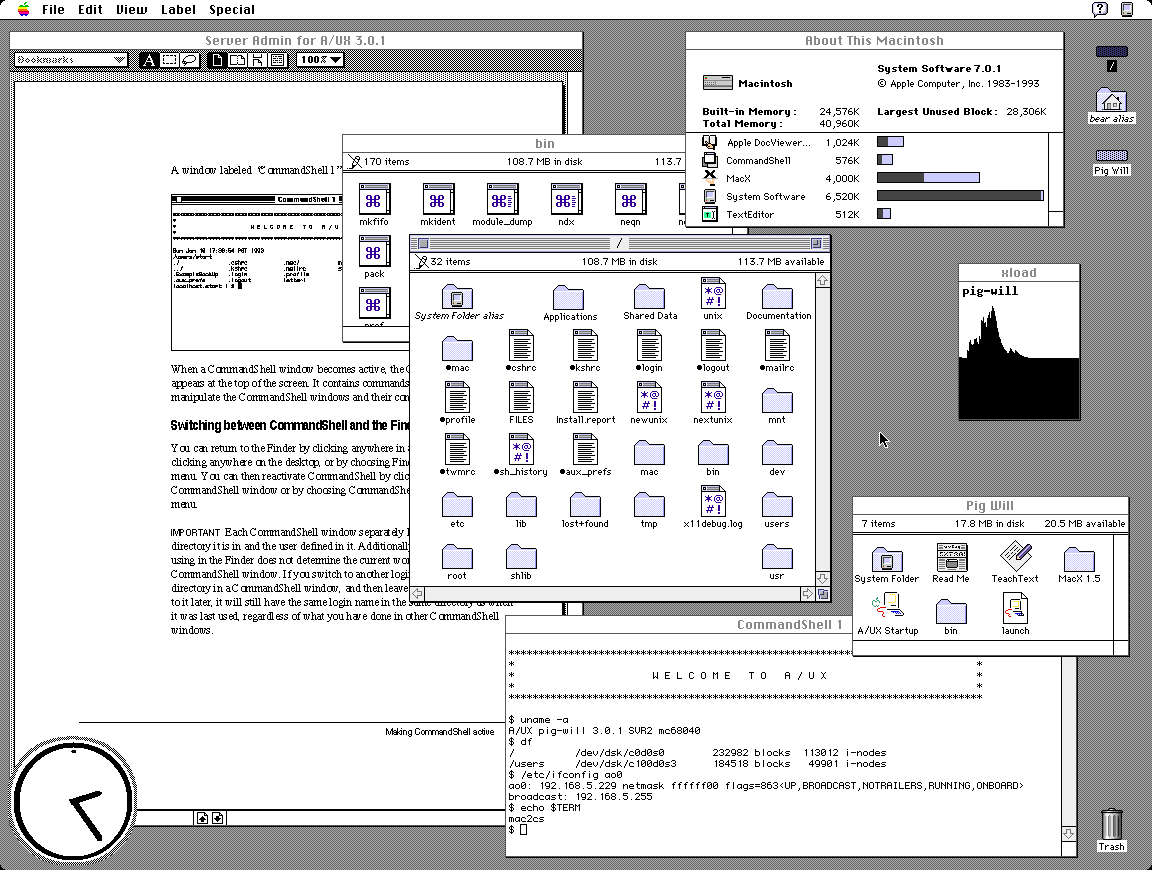
AUX http://www.typewritten.org/Media/Images/aux-3.0.1.png
It's suprising at first look that GEM tops my preferences but I recall having a very fond time on the Atari ST 520+. It had one of the best b/w monitors and TOS+GEM was orderly and uncluttered.
Only preemptive multitasking and per-window menus were missing. As a plus, the OS was in ROM, so boot times were <1s.
I really wish Windows 11 had a Windows 2000 mode. I want a grey, boxy UI, but I also want al the modern technologies Windows has introduced since—DirectStorage, D3D12, fast SSDs, device-independent pixels and vector UIs, all written directly against a Windows API that is modernised, safe, and easy to use. No React, no ads in my weather app; the only browser on my computer will be the browser itself.
I love this kind of thing :) I finally have a second site to bookmark alongside this similar collection: https://guidebookgallery.org/screenshots
No mention of GeOS!
https://en.wikipedia.org/wiki/GEOS_(8-bit_operating_system) https://en.wikipedia.org/wiki/Berkeley_Softworks
While I recognize many of these, I had no idea about the IBM Academic Operating System (a version of UNIX for their RT RISC workstations distinct from the normal IBM version AIX). There are just snippets of info about this OS on Wikipedia and other sites -- I wonder why IBM created it when they already had AIX.
Alleycat in CGA just hit me hard.
For the people that didn’t live through this time, lining these images up makes it obvious why those that did speak of how visually impressive the Amiga was.
This leaves me kind of sad, that we've had such little innovation in desktop / window-managers for 30 years.
Certainly it doesn't feel any easier to manage multiple windows than when we had a quarter of the screen space.
This is like porn for me :)
It's one of my favourite things, looking at and analyzing older interfaces. Some are lovely, some are cute, some are ugly, but most are... "naïve"? I love to think about the effort, the research, the trials and tribulations. I feel I will spend a great deal of time in this page!
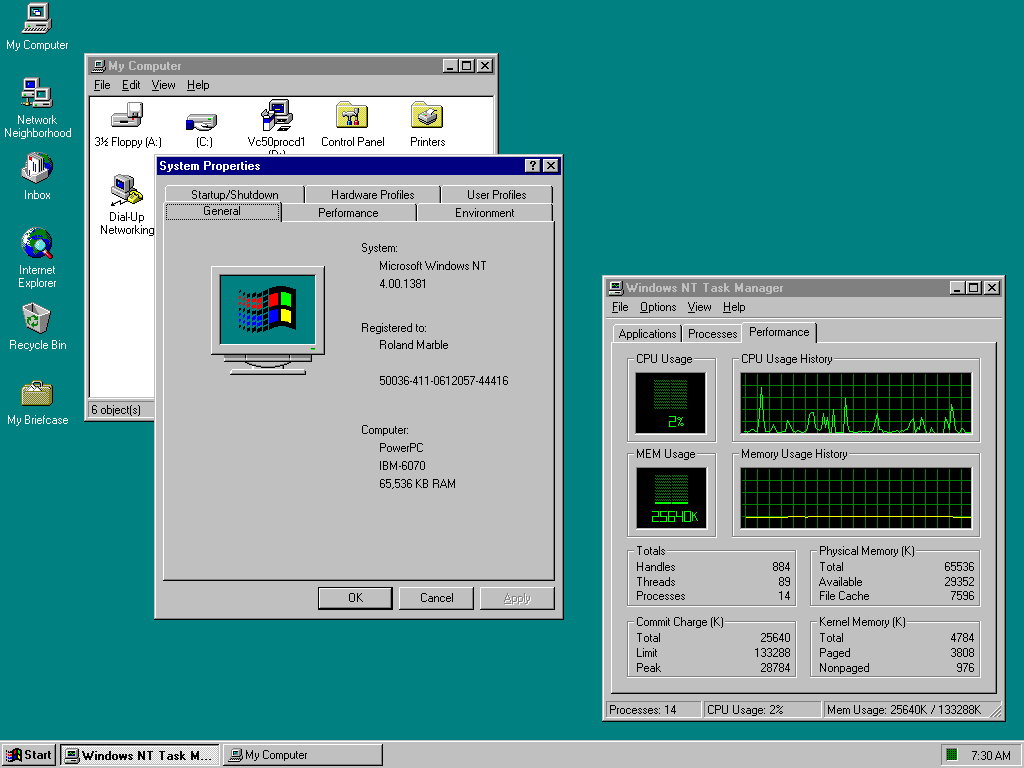
I miss the old days. Thirty years ago, 64MB of RAM was considered a thing (http://www.typewritten.org/Media/Images/winnt-4.0-ppc-new.in...)
Can't help noticing how the interface and general mechanics of these old OSes were tightly coupled to the hardware. Both the makers and users of that era seemed to relish that vibe. I know I certainly do.
However, that paradigm made computers daunting for anyone who wasn't an enthusiast. While I’m nostalgic for that level of transparency, I recognize that those hurdles stood in the way of mass adoption.
We might lament how 'dull' or 'abstracted' modern software feels, but technology's primary purpose is utility, not just to be venerated as an artifact.
THAT SAID, I still believe that user-friendliness isn't an excuse to strip away agency.
Modern simplification shouldn't feel like a forced lobotomy of the OS (or any piece of software really). There’s no reason we can't have both: an interface that stays out of the way for the average user, while providing total control for power users.
Whatever happened to progressive disclosure?
Nostalgic for VAXstation/DECwindows terminals where at the time the monitor weighed more than I did.
Previously:
Historical workstation desktop interface screenshots - https://news.ycombinator.com/item?id=36191713 - June 2023 (55 comments)
Retrotechnology – PC desktop screenshots from 1983-2005 - https://news.ycombinator.com/item?id=15968745 - Dec 2017 (58 comments)
Where did the author get a copy of pre-X-integration NeWS, I wonder (if indeed they did). I haven’t been able to locate one online after a lot of determined searching, but I also can’t bring myself to declare that there isn’t one because the name is so ungoogleable.
I distinctly remember, and found, the NeWS (Network extensible windowing sisten), where you could develop with PostScript(TM) for application windows.
xfm from the first Slackware print, I really liked that file manager. But these days it fails to work. I tied many years ago to get it work but failed :(
It's funny how early some things do and don't look familiar. A decent chunk of unix-family OSs have changed some since then, but also kinda not. CDE 1.0 looks almost exactly like the latest version:)
Let's talk about the HP-9000 as depicted in http://www.typewritten.org/Media/Images/hpwindows-starbase-u...
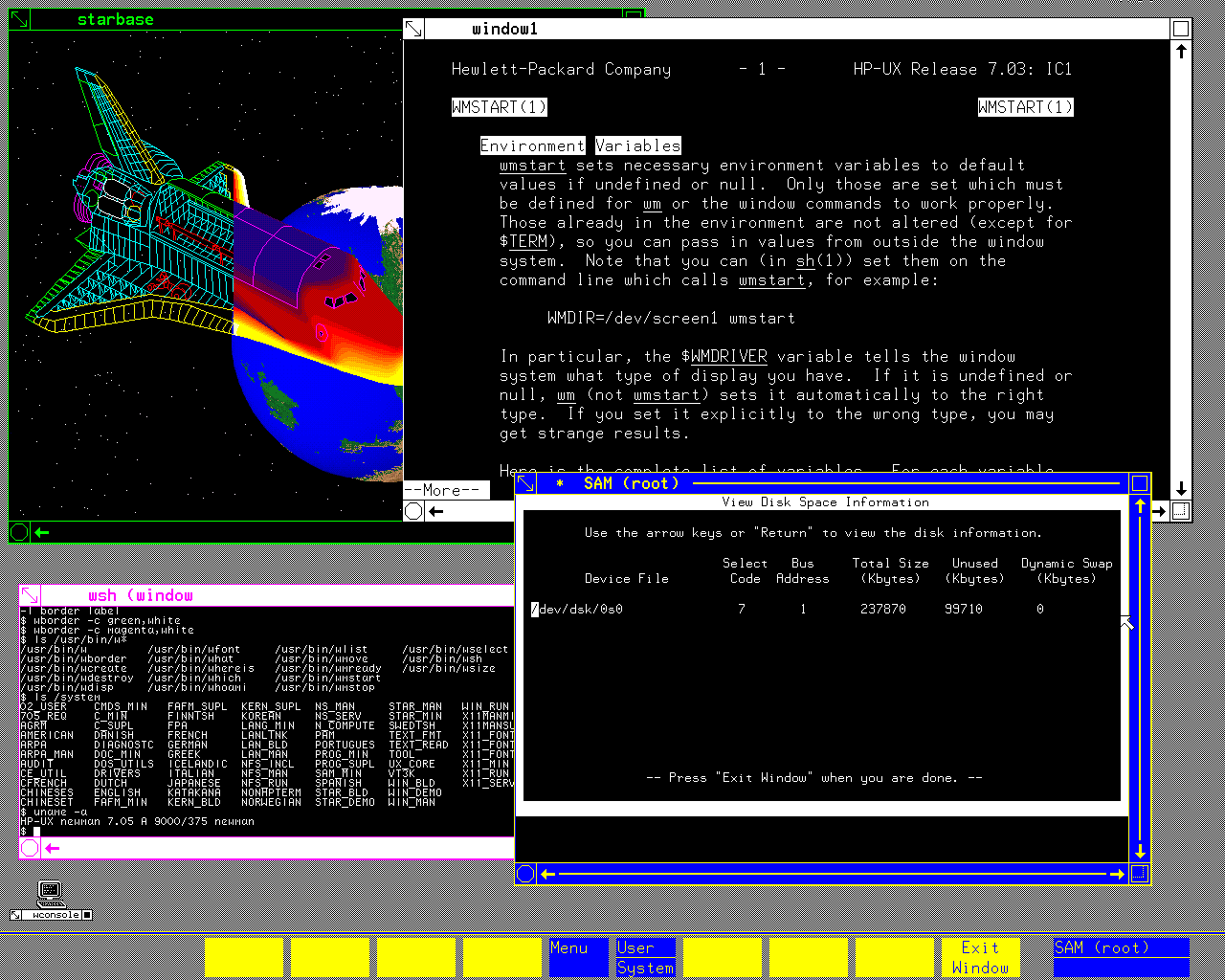
There is a `man` entry displayed in a terminal window there. The first Unix I've ever touched was HP-UX on an HP-9000 (server series, not the workstation one), and I have this memory that the underlined words you can see in that manpage as well were actually hyperlinks you can select and would bring you to the relevant section of the manpage that discussed that term. Am I fabricating that memory or is it real? I cannot find any info about it on the Internet.
For anyone pining for innovation in Desktop, a small part of this culture is still alive in Ricing competitions.
A recent favorite of mine is this one. Timestamp starts at the final submission being reviewed: https://youtu.be/DxEKF0cuEzc?si=mqE_2vpKDBsMWlKW&t=557
Them beOS icons were lovely at the time
No Plan 9. Otherwise, resources like this might help studying how the interfaces of the past evolved (at least, on the surface).
I love old desktop OSes so much I've created a Windows 3.1 theme for mine: https://news.ycombinator.com/item?id=47909295
I kinda miss that in the early 2000's kde and gnome shipped with a fuck ton of window decorations based on all those (then-not-so) old OS. Teenager me had fun switching them every day and playing with windowing behavior (focus follows mouse! hover to select and only one click needed!). I wonder what techy kids today do to explore and have fun.
Speaking of the early 2000's, man, Aqua was such a good design. I appreciate the nextstep paradigm and design, but Aqua was just so futuristic, in a good way.
I was not ready to start my day with a OS/2 Warp nostalgia feeling
I'm sure someone reading this thread has UAE handy in order to contribute a screenshot of AmigaOS/Workbench 1.x.
Even the site with its NeXTStep style (love it).
great list, would be cool to see each OS evolving over time.
NextStep/OSX was the only desktop OS that did not feel like a downgrade from Amiga Workbench
What a wonderful resource! HP VUE has interesting color choices and a nice "Dock"
The Cambrian period of operating systems and GUIs.
> DECWindows
> /tmp/med_16.sixel
... Is that Sinfest? From before the author went weird? If so, then that's certainly a very different way of feeling old than I expected when clicking the link.
P.S.: There's another in "RiscOS 3.71", and "System V Release 4 Amiga Version 1.1" references Penny Arcade. [0]
[0] https://www.penny-arcade.com/comic/2005/01/05/the-merch#
Deeply nostalgic! Thanks for sharing.
"403 Forbidden"
GEM Desktop 1.2 looks sooooooo like the ancient Apple operating systems. I first saw this on a friends' parents computer and was quite astonished why computers may look like that. I was very used to Windows/DOS back then.
I am also glad to have switched to Linux in 2004 already. Once you have been using Linux for a while, whenever I use windows I am annoyed at how slow it is. Just file copy operations alone and then billion excuses windows developers make, trying to copsplain why it is so slow. When I have to backup 30GB, I don't want an explanation why it is slow - I simply use what is faster. And that's just one advantage of many more Linux has. (I use the commandline most of the time though, so KDE and GNOME are IMO just pointless eyecandy these days.)
I love how little df has changed since 1985.
Sometime I wish time goes slower
There's a lot of nostalgia in the comments here. I wonder if any reader under say 25 is willing to comment; do you think OS's today are a regression? do those look better?
To me they look unwieldy, heavy and overwhelming and I can't help but think the love for them is just the love for youth or whatever
That brings back memories from pre press days and the SGI Indigo machines. They did some heavy lifting for the time.
Amazing resource!
[dead]
Amazing walk through memory lane, and super useful. One big omission though - starting in the early 1990s, we should be seeing some Linux desktops in there, but I didn’t see any through 1995 or so when I stopped browsing. Also, Irix would be nice to get — although I don’t recall if SGI had much in the way of custom vibes for their window managers, they certainly had amazingly cool 3D demos.
A nice vibe coding project here would be to show these in a carousel with the UI being 1:1 pixels. It’s hard to understand just how different NeXTStep (Did I capitalize that correctly?) felt from Windows — part of it was refresh rates, but part of it was going from 800x600 to 1132x800-ish on the monitor. Color, refresh rates, monitor quality, a cool plastic color and design for the box were all part of the experience.