 alt Hacker News
If you ignore everything that happened in between 1903 and today, it might seem like we've never made any progress on this, but at least in the US wealth inequality was demonstrably not as much as an issue for some of the time in between. For a time in the 20th century, it was possible for someone solidly middle class in the US to be able to save up a bit of money and afford a down payment on a house within a decade of working. That's something we've lost to time now, and it's not because it's impossible to achieve or because of the bogeymen of DEI making the fruits of labor and technology too sparse to share with everyone, but because an increasingly large portion of the pie is going to an increasingly smaller set of people.
The delta between 1903 and today in this regard might be small, but the line between them isn't flat, and that makes it even more tragic and frustrating to have this questioned as if it's an impossible problem.
Replies
> the US wealth inequality was demonstrably not as much as an issue for some of the time in between
But now we're back to pre ww1 level of inequalities
https://static.guim.co.uk/ni/1415721490539/Wealth_line-chart...
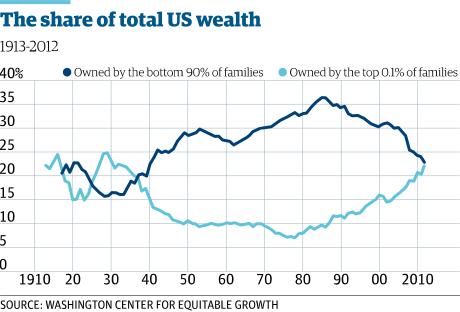
I do agree that the US handled the situation relatively well in the second half of the 20th century, plenty of such opportunities have been squantered badly.
But we cannot ignore that it was truly a unique opportunity:
- The US was the only intact industrial country left after WWII.
- With massive momentum from industrial deployment during the war.
- With a massive optimistic and hardened workforce coming home.
- With plenty of saved wartime income they didn't have a chance to spend due to rationing and shortages, a lot of it saved as wartime bonds just starting to deliver healthy yields.
- With the New Deal that resulted from the horrible Great Depression making sure they got to truly benefit from the fruits of their labour.
- And a wide-open global market to lend to and to sell to for rebuilding the world.
That is not something that can be replicated easily at any time, and if the US makes decisions expecting that that is the norm, there's a disaster coming (perhaps it's why it's a disaster now).