 alt Hacker News
Before pixels: Modular industrial dashboards
Comments
I recently watched both the 1974 and 2009 versions of The Taking of Pelham 123 and it really stood out how the industrial designs of their respective eras helped elevate the original[1][2] in comparison to the remake[3][4].
[1] - https://media.doblu.com/wp-content/uploads/2022/12/Taking-of...
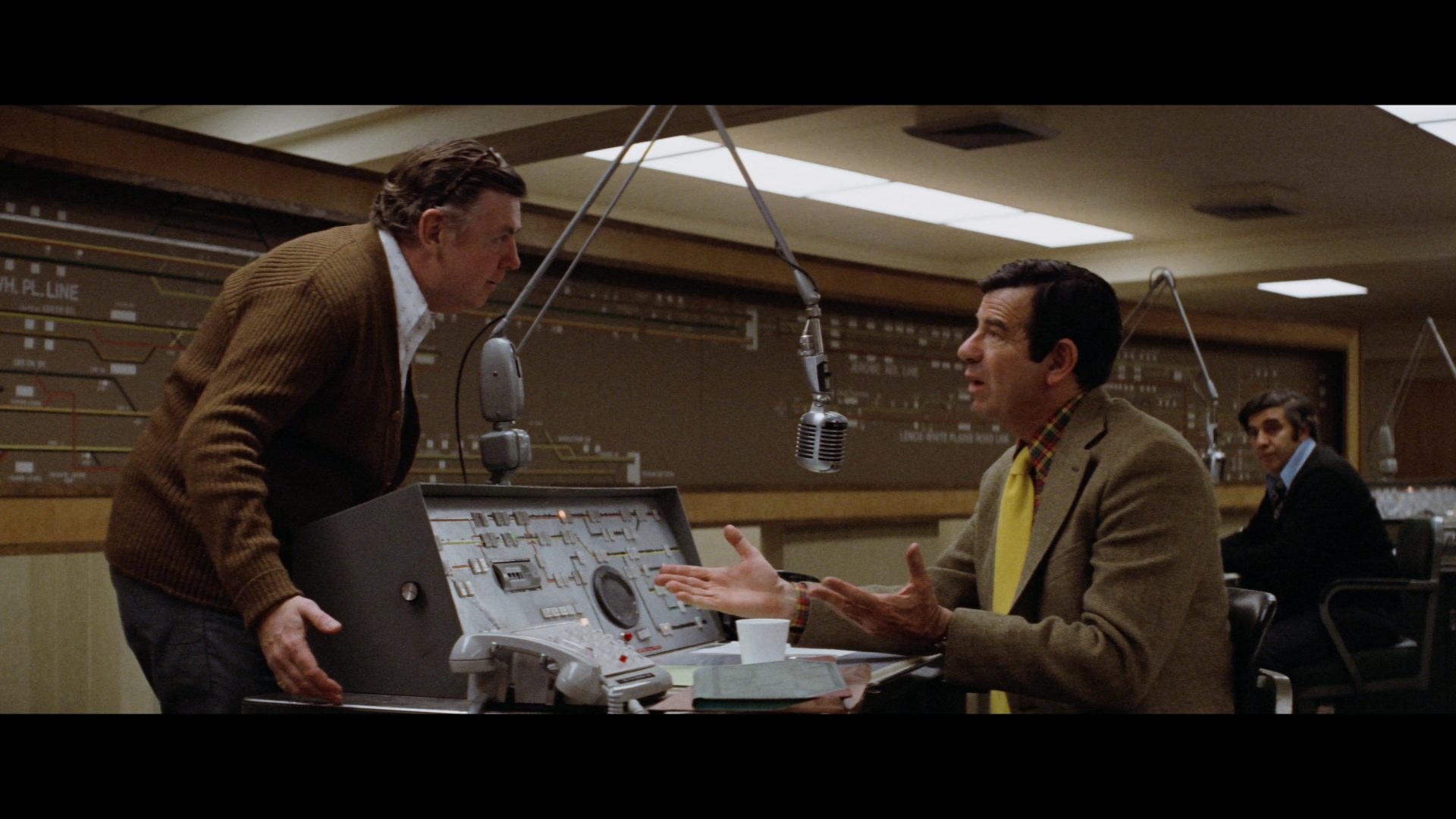
[2] - https://ilarge.lisimg.com/image/21019979/1118full-the-taking...
-screenshot.jpg)
[3] - https://c8.alamy.com/comp/K3KWM1/the-taking-of-pelham-123-da...
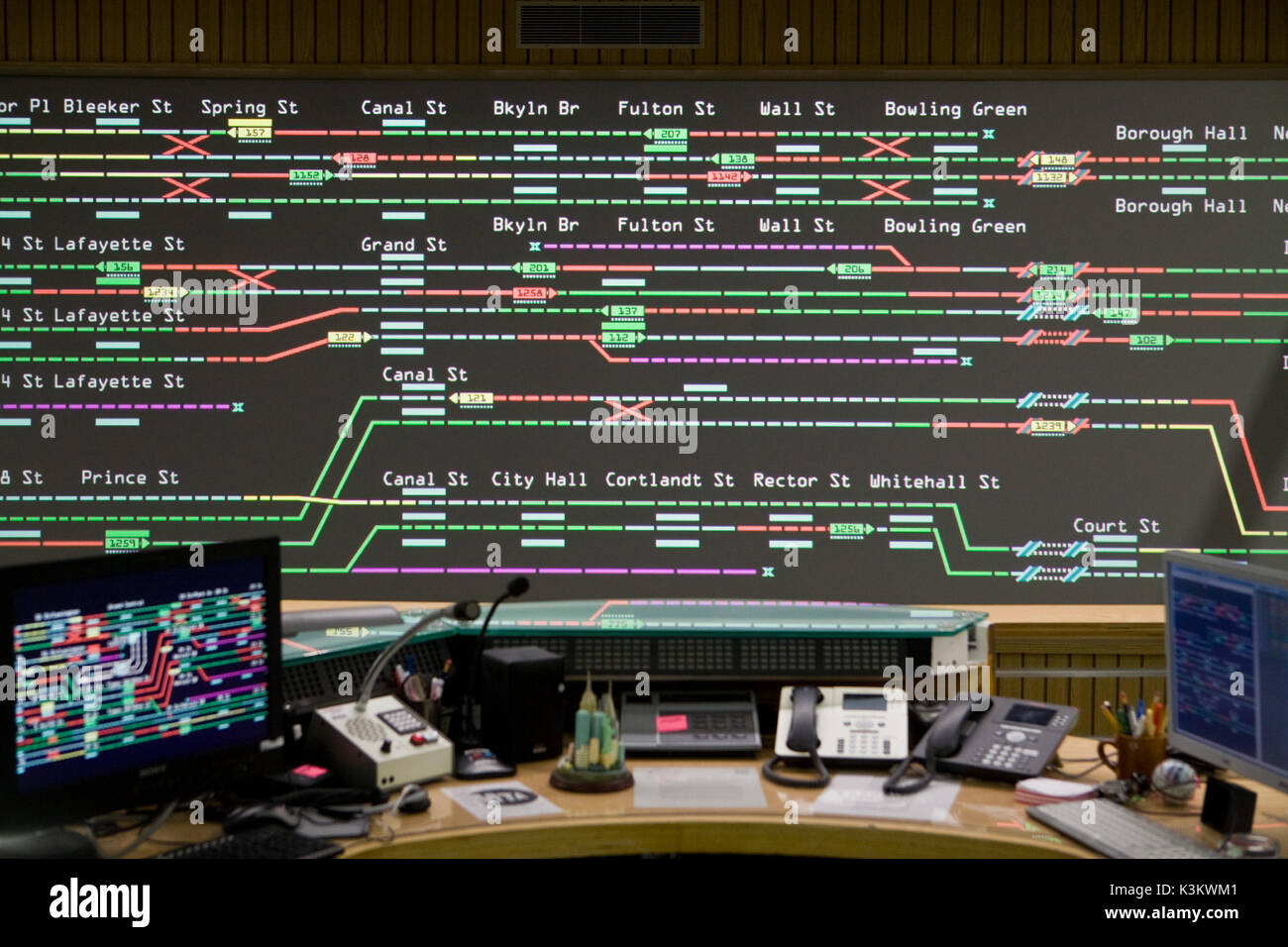
[4] - https://press.moviewalker.jp/api/resizeimage/content/main/mv...
In the late 1990s or maybe early 2000s, there was a documentary about FedEx and they filmed inside their central operations room.
All of the planes were tracked on giant panels velcro panels that allowed you to move the plane right (aka "it's moving to the next time slot") or up/down (aka " to another route").
The presenter asked why they hadn't switched to computers and the FedEx employee was saying they were considering it but the current system was working very well for them.
This, in turn, reminds me of this article about the Baghdad stock exchange going from chalkboards to computers. I believe they quote the head of the exchange saying something like "chalk is impervious to power outages but computers are faster"
https://www.rferl.org/a/Iraqi_Stock_Exchange_Trades_Chalkboa...
These very distinctly remind me of electric/electronic didactic "toys" from the at least 80s. Plastic cubes, containing a single (usually) circuit component, like switches, resistors, lights, coils, or just wire, with bare metal connectors on relevant sides and a symbol on top. You got a whole bag of them, as well as a gridded board you inserted the cubes into. Could make even usable stuff like simple radios.
These designs seem so honest. Ie the maker really tries to communicate to the user.
Compare to most modern UI:s that are all about demos and looks and actually hostile towards users. I can't know what direction is hot and cold in the shower because it's light gray on silver.
Does anyone know how these actually worked under the hood? Was it essentially just a mounting solution, and you wire them up how you need on the back, or were they essentially pluggable modules with some kind of control system attached to the board? I can't imagine it's the second option, given the timeframe, but I kinda want to see a system like that now
There's really so much physicality to interacting with objects that we've lost as we switch to more and more touch screens and capacitive buttons. Also the reassuring "thunk" of a nice chunky button to confirm you've pressed it is just so important to user confidence
> Don’t you just want to rotate it, no matter what it does?
A grandparent's house had light switches that looked kind of like this but black (bakelite). And they are very satisfying, a good amount of resistance while rotating, then click.
> And I believe this was a way to annotate that something was… fixed, maybe? Or on its way to being fixed?
A "Rotte" is the crew working on railway construction. So I assume this is a label to warn that personnel is on the tracks
These are tiny compared to what Hans Zimmer is using: https://synthanatomy.com/2025/10/syntesla-giorgio-iii-a-mons...
Very impressive. I also like this LECTRON-system by Gregor Greger from 1965. BRAUN bought the rights and then Dieter Rahms worked on the design in 1967. Produced until 2022 (!)
You can still find some stuff on ebay with "baukasten braun lectron"
edit, Link to Wikipedia: https://de.wikipedia.org/wiki/Lectron
Helsinki has one on display in the mid-level concourse of the Hakaniemi metro station. Sadly, it has no blinking lights.
>This big industrial switch toggled between day and night. I don’t know if it changed the operation of the system, or is just switched on some sort of a dark mode for the panel itself:
I think we can answer that with 'yes, it changed the operation of the system. The indicator next to it is labeled in Amperes and 30 Amps is a lot of current. depending on the driving voltage at 24 V (pretty common for control panels like this one) that's 700W give or take and if it is a line voltage (220 V in poland at the time) that 6.6KW.
Does anyone still sell cheap standardized modular components like these to make your own dashboards, etc??
Hmm. Is this why rail maps tend to look like circuit traces?
It’d kind of make sense for the operator status map to look like the map you hand out, or put in stations. The design is an abstraction good enough for understanding switching status for operators, why not for riders trying to get to Manhattan Beach?
I wonder if those end up on ebay? What would even be a term to search for?
One of the most beautiful things I ever saw.
Maybe every abstraction is a finite state machine, and we can construct an analog circuit of any of them. I have an opinion about metrics where they are not the data, but the emergent analog signal from a system.
The idea of collecting data and deriving metrics from it is absurd when you look at your system as a thing that has inputs and an output and the line for the output goes up or down over time. The beauty of these industrial systems is that the makers understood this principle. The system produces a signal that bears meaning that these interfaces express.
The very cool https://www.astrouxds.com aims to be the pixel version of the physical dashboards. It's a very cool design library.
Not related to Astro the templating engine.
[flagged]
[flagged]
".avif" format rears its ugly head.
https://addons.mozilla.org/en-US/firefox/addon/webp-image-co...
> I do imagine these panels must have been interactive with all the buttons?
"Spurplan" (roughly "track plan") signalling control panel. To allow a train from point A to point B, you hold down the button at A and then press B. If there's no conflicts, it will set the switches along the way, lock the route (so you can't set a route that interferes) and then "open the signal", as they say in German, at point A.
This was a customizable system built out of standard components, which served its purpose well for a long time. Point your favorite translation tool at https://de.wikipedia.org/wiki/Relaisstellwerk for more details, or http://www.stellwerke.de/ if you want to go down a rabbit hole.
> Rotte [And I believe this was a way to annotate that something was… fixed, maybe? Or on its way to being fixed?]
Rotte = work gang. Reminder tag to not send a train down there.