 alt Hacker News
Show HN: Vegetable Gardening for Engineers
Comments
Gardening is near and dear to me, so I love to see it show up on HN. Thanks for sharing :).
A couple points of feedback that I noticed so far:
1. I wrote a comment here in response to what you said about the tradeoff between growth rate and growth quality: https://news.ycombinator.com/item?id=50415982
2. In your section on photoperiodism (https://jrcpl.us/contrib/2020/gardening-for-engineers/#photo...), it seems the examples are backwards. Ie, lettuce is a long-day plant that flowers when days are long, mung bean is a short-day plant that flowers when days are short.
Cool intro to hydro page.
Consider adding in some info about vapor pressure deficit (VPD). It's basically the effect of temp and humidity on the leaf surface. Engineers will love it.
If it helps, here's a calculator I made a while back: https://globalgarden.co/calculators/advanced-vapor-pressure-...
Hydro (indoor growing) was my life for 15 years.
I somehow get weed grower vibes reading this
On a more serious note, I have found that choosing good easy to grow crops for your area makes a lot of difference. For example, sweet potatoes grow well here, the leaves go great in salads, they are relatively pest free and hardly need watering at all. You are flexible in terms of when you harvest the tubers and, and the tubers keep well over winter in the house.
https://jrcpl.us/contrib/2020/gardening-for-engineers/img/te...
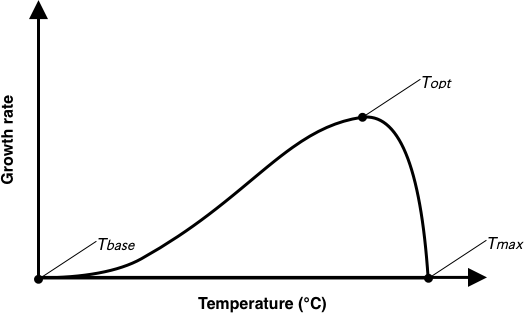
>Crucially, there is a tradeoff between growth rate and growth quality. Higher temperatures can result in faster growth but also thinner stems, weaker roots, and less flavor.
Nice job! The hydroponic section matches what I'm learning at Cabrillo College.
You mentioned apps like Korona as a low-cost alternative to a quantum meter. Have you tried one? How different were the readings from a real meter?
Growing food is very complex, probably too complex for our brains. And I believe we will have to learn again how to grow food without our current support systems one day. I'm building projectcanopi.com toward that goal.
every engineers loves gardening for the end of career
The brain asks:
> I am currently exhibiting overwhelming stress from deeply technical work being part of my every day life, and feel I am missing the 'nature' element of life. What should I do?
The brain responds:
> Gardening! A wonderfully complex system that will just 'live' without me! A delightful escape!
The brain asks:
> Yes, gardening! But how? There are so many variables! What are the parameters? Where is the specification outlining the success criteria? What defines a living organic system?
Gardening is expensive. Good I stopped at plants and didn't go for chickens. Every year is different. First you fight the snails on the strawberries. Then the aphids on peppers and roses (this is each year). Next the mold attacks the tomatoes. And if you don't have enough, the starling will eat your blueberries.
Exactly what I want from hobbies I do to relax: turn it into an unnecessary spreadsheet exercise worse than anything I have to deal with at work.
When people discover that I work in tech they ask me what they should buy. I tell them that they should buy seeds.
I went down exactly that path with an outdoor bed: 8 soil probes, a weather station, a camera, and a drip valve. The fun part turned out to be not the automation but letting an agent decide the watering every morning and write down what it expects, then check the probes the next day to see if it was right. Fixed schedules kept being wrong in ways that needed context (forecast, last week's response, leaf wetness).
It's still humbling: it missed caterpillars on the broccoli until I made it look at full-resolution photos. Wrote it up here: https://jatorre.github.io/garden/
[flagged]
[dead]
[dead]
Watering is easy but one can overcomplicate it. Each plant has different water needs. Screw it up, you get likely get root rot or dry soil.
An engineer might analyse the soil and the plant water needs. Inject water to right levels, or set a timer. These settings need to be readjusted constantly without a hydrometer.
I found an ancient solution that worked incredibly efficient and required no electricity and far cheaper than spending hundreds on electronics. Ollas. The science is called capillary action.
I went a step further as an engineer, and did DIY terracotta pots + silicone. Added a testing stage, of course. Filled pots and sealed it over night. If leaking from seal, more silicone. For filling them up, I used irrigation fittings hooked up to a tank. If I wanted to, I could use rain water into tank (with overflow). That way watering is a fully automated pipeline.
I don't have a picture on hand but others have done it like this: https://www.abc.net.au/gardening/how-to/olla-watering-pots/1...
Other fun topics I looked into:
- Companion plants (avoid spending on pesticides)
- Crop rotation (avoid spending on fertilisers)
- Composting (for compost)
Those are not easy to automate but other topics to make it far cheaper to grow crops without trips to nurseries.